How did I become a Dysgraphia Expert?
Writing skills start before you pick up a pencil.
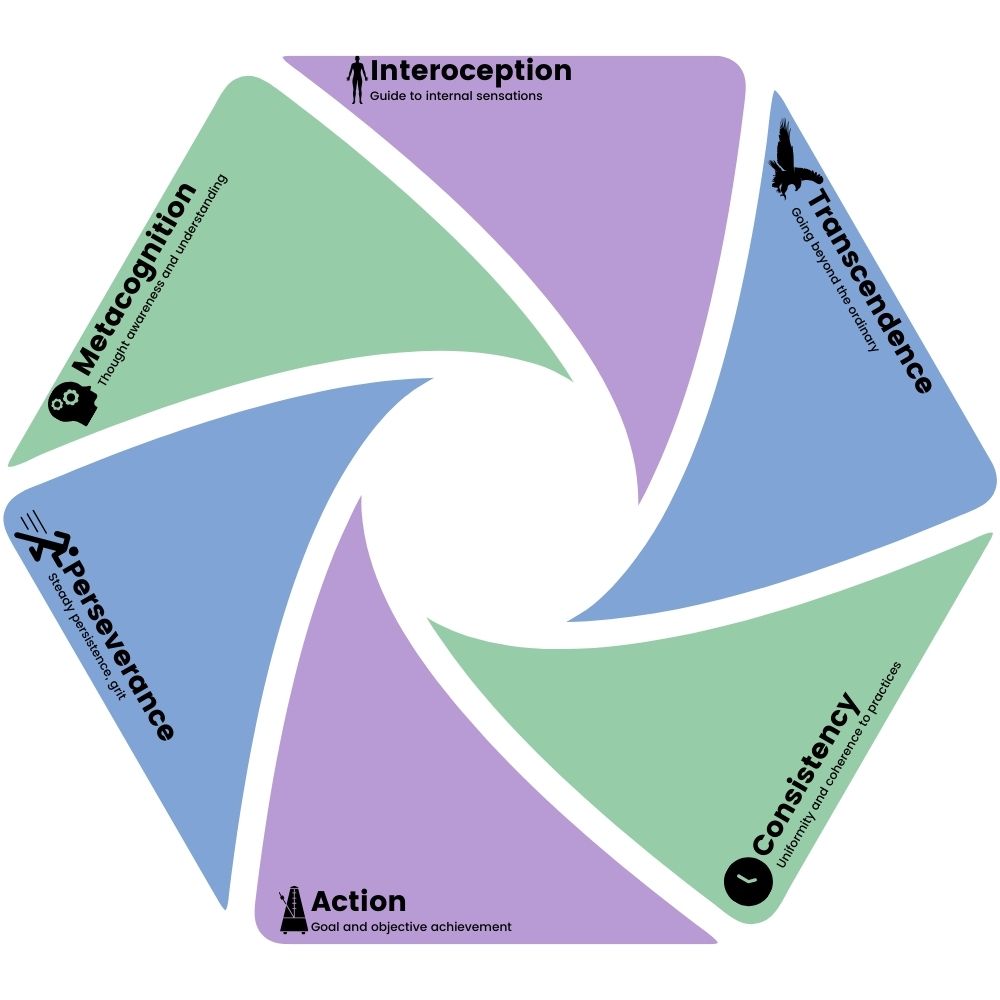
Stop dysgraphia before it begins using the IMPACT Success Blueprint.
Dysgraphia is a disability in written expression.
Written expression includes grammar, punctuation, capitalization, spelling, sentence structure and syntax, and paragraph organization and clarity.
The result of poor writing skills is illegibility and a speed that does not meet those of one’s peers.
According to the National Center for Education Statistics, writing scores have improved since 1998.
154/300 4th-grade students write proficiently.
Students with disabilities scored 122/300 proficiently. See the National Report Card.
Writing starts with neurological development.
Sensory-motor-memory interventions need to be strategically placed throughout a student’s day. They must occur daily to make an IMPACT that LEADs students to succeed in their future college and career.
Too often, intervention ideas are recommended that include ingredients for change yet need more details of why and how they work. It’s like giving a teacher a bunch of ingredients and saying, “Go for it. Make what I made,” and not including the step-by-step process to duplicate one’s success.
It takes repeated experiences to look at the ingredients and come up with the cake your mom used to make. Without guided experiences, even the best teachers and therapists display different intervention results.
The IMPACT Success Blueprint digs to the core of achievement, so success is prevalent across your classrooms. This checklist uses the superpowers of the teacher in collaboration with the superpowers of your related service providers to form inclusive classrooms like you’ve never seen them before.
What is the IMPACT Success Blueprint? A checklist to support the whole student’s strengths rather than focusing on weaknesses. The Formula is based on neuroscience and cognitive-based learning to overcome learning challenges.
I was sitting on the floor sobbing
I had enough! I was picking fights with my husband and kids just because I wanted them to feel as miserable as me.
My self-esteem and self-confidence were so low that I was contemplating suicide.
How could I leave two small children at home? They were my life.
I had lost another job due to “communication” issues.
I just wanted to get finished with my master’s degree and transition to pediatric practice.
I had one more semester to go. Taking courses one at a time these past five years have taken a toll on my family.
That’s when the Special Education teacher and I started talking
A Special Education Teacher and I attended church.
She heard about my job.
She knew that I wanted to begin a career as a pediatric occupational therapist.
She assured me that she could get me enough students to have a part-time job.
Boy, was I wrong!
I went to the lawyer and accountant.
Wrote a business plan.
Gave it to my friend.
She took it to her boss.
Yes, they gave me a client. That’s right, ONE!
I was devastated.
I had just spent this money on school, lawyer, and accountancy fees.
One student wasn’t going to put food on the table.
I started calling every cyber, private, and public school I could find.
I eventually had 15 kids on my caseload.
My business plan: Travel to where the students went to school.
The schools that offered to bring me on board were cyber schools long before the pandemic.
Everything was going fine, or so I thought.
I came home after a day on the road to an email demanding that I turn in my paperwork for all students, with that school, for the past year.
What? I thought the only notes that were required for school-based practice were quarterly progress notes.
I didn’t have daily progress notes.
I spent the entire evening and night recreating sessions for six students with a prayer that parents would agree to sign off on them in the morning.
Fortunately, they all agreed.
However, the pressure from the sleepless night and the resurfacing of “communication” issues was too much for me to handle.
The moment the crisis was averted, I snapped. Okay, I was snapping all night!
Meanwhile, my daughter was struggling at school
My gifted daughter came to me after calming down and asked me to help her with spelling.
Spelling? What do you mean, spelling?
Evidently, she was struggling to spell the words on her list.
As a perfectionist, she could not tolerate grades that weren’t 100%.
Any misspelled word sent her into an anxiety attack.
Later that week, I was at one of my student’s homes, and one Mom asked me
How can my child read above grade level and have so much trouble writing?
Fumbling for an answer, I responded, “I wish I had an answer for you.”
Between my issues, those of my daughter, and now a student, I felt like I was failing us all.
That’s how my research truly began
Not only was I trying to help my student, but I was also trying to help my daughter and myself overcome writing challenges.
My research led me to find out that nearly 5% of gifted students suffer from writing disabilities.
Gifted students with learning disabilities are considered twice exceptional.
Looking at a bell curve, student IQ and Achievement Scores lay outside the average range.
Students must have scores greater than 130 to be considered gifted.
Scores 85 or less indicate a learning disability.
What about those kids who aren’t gifted?
Many referrals to occupational and speech therapy are for students who struggle to read, write, and understand math.
Students with writing challenges tend to have difficulty reading.
They are anxious.
Some have Attention Deficit Hyperactivity Disorder (ADHD) or Autism Spectrum Disorder (ASD).
What happened next was placed on my heart my God
I spent two years reading through the Book of Esther every morning as part of my morning routine.
Her courage and tenacity helped me come through that stupor created by the “communication” issues.
My self-esteem and confidence were resurfacing.
God told me that I should write a book.
Who me? The girl with poor self-esteem and confidence with “communication” issues.
What was I going to write?
I put that nudge to the side
But God was persistent, as He always is.
I finally gave in and said, “Here I am Lord, Send me.” (Isaiah 6:8).
What was I going to write about?
Then It hit me, what if I found a way to answer the question that parent posed several years before.
I set out to answer and follow God’s command.
God began revealing how obedience changes lives
Not only have I published Handwriting Brain Body DisConnect, but I am also scheduled to release three more books in 2023.
I have discovered how to distinguish
- dysgraphia from co-morbid diagnoses
- How to explain it to others
- Designed courses for people to become Certified in the Dotterer Dysgraphia Method
My programs are Act 48, Approved by the Pennsylvania Department of Education
Oh yeah, I am writing a historical fiction book about Esther and learning disabilities. Look for in late 2023.
My business, Dotterer Educational Consulting, is designed
For teachers and therapists who have a student with illegible writing or spelling challenges, Dotterer Educational Consulting builds
clarity, community, and competency by designing professional development tools based on neuroscience and sensory processing
to streamline evaluations, interventions, and outcomes. School districts trust our ability to deliver these benefits because we use
evidence-based and action research to improve written communication from the time a child learns to write through everyday
adult writing activities. Our programs contain para programming that transitions students from independent time to academic
learning and thinking. These para-moments stimulate the body for effective brain work and improve social-emotional learning. We
reduce gifted and special education costs for school districts through a model that promotes collaborative instruction with teachers
and occupational therapists for all students without impacting job security. We do this without a pencil. Unlike our competitors,
Dotterer Educational Consulting does not have a curriculum for handwriting or keyboarding, nor do we offer global continuing
education for various topics. Instead, our professional development focuses on the impact writing challenges have on all subject
matter.
Memberships

Awards